
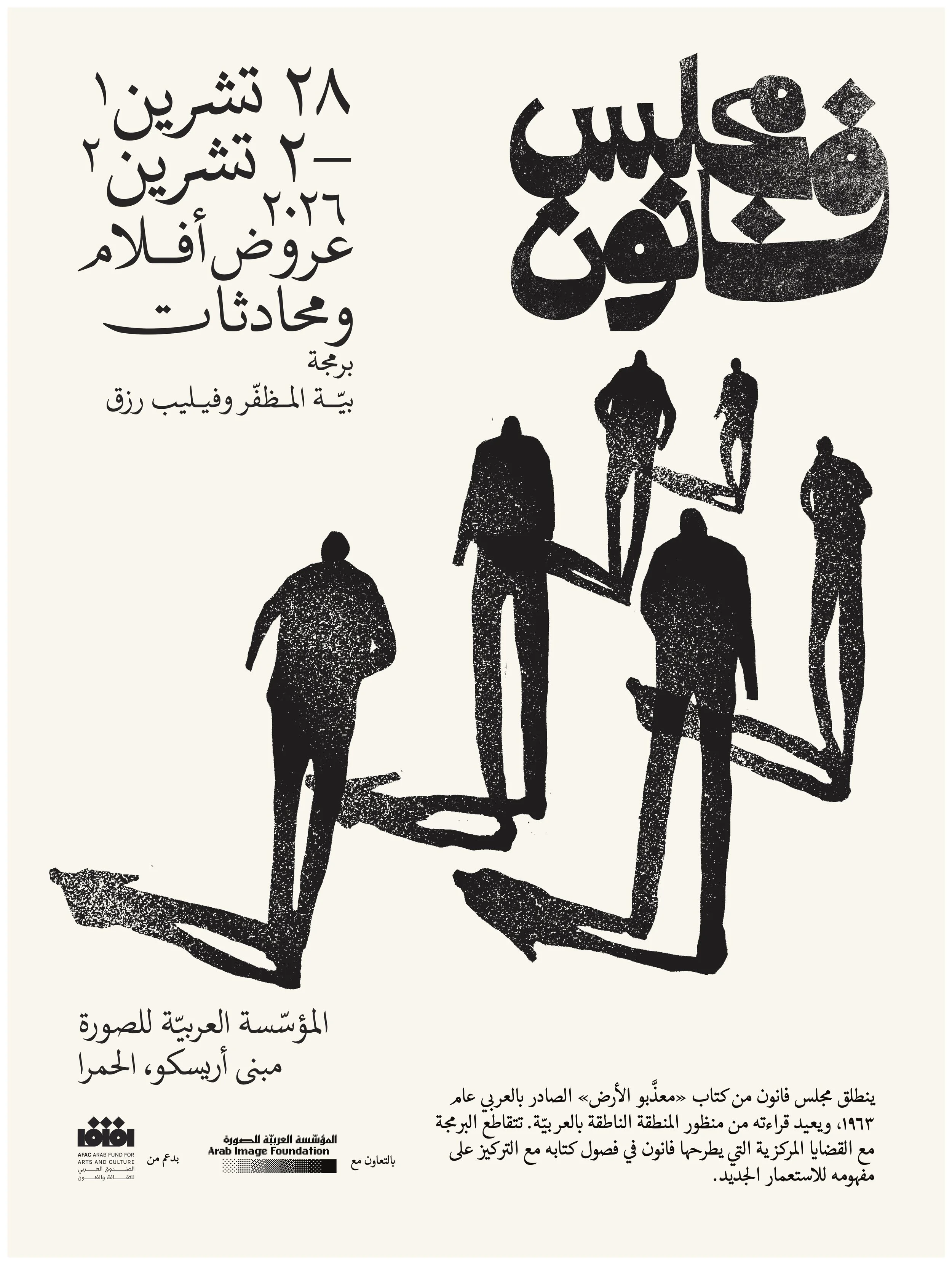
Majliss Fanon
a program of screenings & conversations
programmed by
Baya Medhaffar & Philip Rizk
October 28 - November 2, 2026
hosted by the Arab Image Foundation
Beirut
Tufan Al Aqsa served as a focal point for a prolonged period of crisis and made the following observation undeniable: forms of domination have changed in appearance, but not in nature.
Majliss Fanon hopes to speak into this reality by proposing a collective critical reading of Frantz Fanon’s The Wretched of the Earth sixty-five years after its publication in 1961. The Majliss will take place at the Arab Image Foundation in Beirut, the city that brought the world the Arabic translation of the book, and feature the screening of a body of films from the “global neocolony” that in various ways engage its chapters. Over six days, nearly one day for each chapter, the Majliss invites participants to gather, to watch films, to engage with speakers, and to return to unfinished conversations proposed by the book, with the aim of situating ourselves better in the neocolonial context that we find ourselves in and that Fanon predicted.
In the wake of the second Great European war (“World War II”), the United States sought to take over European powers’ position of global domination by, among other things, calling for an end to colonialism. This call was welcomed by many of the colonized of the world, but reality played out differently. In Palestine the new hegemon professed Western “guilt” as an excuse for the exceptional case of classical colonization, and the Zionist project has given ideological cover to a perpetuation of imperialism and white supremacy in their rawest forms. More commonly, however, colonialism lived and lives on in the guise of neocolonialism, a term that Fanon redefines in the third chapter of his book. He argues that colonialism, despite Western claims of its death, is maintained in neocolonialism through a partnership between old and new external imperial forces and local elites (the government, military, and bourgeoisie) who share their economic interests. This allowed the colonial powers to adopt a less confrontational, less visible, and more subtle strategy whereby colonized players participate in the domination of their own societies, actively obscuring the structures of power. We still linger within this lack of clarity today. The directors of The Hour of the Furnaces, Octavio Getino and Fernando Solanas, describe it when speaking of Argentina in their 1969 manifesto on Third Cinema: “they replaced the struggle against imperialism and the native oligarchy with the struggle of democracy against fascism, suppressing the fundamental contradiction of a neocolonized country.”
Within the neocolonial paradigm, while acknowledging the pitfalls of national consciousness, Fanon considers national culture as a critical battleground around a society’s articulation of itself. For the colonized, breaking with old systems of oppression politically and economically requires a parallel process in consciousness, or the way communities see themselves; thus the critical role of national culture, or the way communities represent themselves. A liberated community is hardly possible without a liberated communal culture. It is on the level of culture that we must identify and root out the mechanisms that perpetuate colonization, both material and symbolic, in our time. This entails a celebration of local culture and language—without nostalgia, a society must be aware of its past and place itself in the present with confidence to dislodge itself from the mechanisms of colonialism—as well as the reformulation of aesthetic language and the institutions that produce it.
In recent years, cultural producers in the global neocolony have largely failed to identify the production of national culture as a battleground on these terms, and therefore failed to protect their living cultures against a cultural domination tied to present forms of colonialism. Rather than offering sources of grounding and unifying anthems for liberation, many cultural producers create works that embrace a colonial ethos and colonial systems of production, bringing about a sense of alienation in their societies.
Moroccan cultural critic Abdellatif Laabi writes that authenticity, as the counter to alienation, requires perpetual vigilance. In the world of cinema, this means an astute assessment of the models of production and distribution that are normalized today. How can we counter the neutralization of political radicalism in films by the imposition of “industry norms” upon them or by ensuring their assimilation through how they are screened?
The authors of “Towards a Third Cinema” shed light on this issue by identifying how the process of neutralization operates. Getino and Fernando propose a tripartite typology of cinema based on a materialist reading, arguing for a third path they call “guerrilla cinema,” which conceives of cinema not as a work of art that possesses the “privilege of beauty,” but as a destroyer of “the image that neocolonialism has created of itself and of us” and as an activity that must find its own form, both material and aesthetic, in the struggle for emancipation. If we take seriously the principle of neocolonialism, we are still in that process of emancipation from colonizers, old and new, local and foreign.
The purpose of Majliss Fanon is not to comment on The Wretched of the Earth, but to continue conversations cut short by Fanon’s early death and more vitally by the suppression of militant struggles in the post-independence era. We hope to reread The Wretched of the Earth in Arabic today to reignite a political force, to name our enemies, to transform our dead ends and contradictions.
Majliss Fanon invites its guests to ask how, as cultural workers, we can ground our work in a struggle in order to support that struggle. How can we reclaim the ability to name and invent the world?
We suggest that rereading Frantz Fanon here and now is to refuse to let his words be detached from praxis; it is to recall that his thought arose from a specific experience, from a struggle, from a body engaged in a militant history. We hope to develop a framework that takes Fanon’s thought as a starting point and moves on from it, the wretched of the Earth, radically mapping out the present in order to be a force for action.
The militant psychiatrist Frantz Fanon shows us that decolonization must entail an overturning of the internal structures of perception and language. The decolonized cultural worker therefore participates in the creation of reality and the institutions carrying it—establishing and asserting narratives, bringing forth worlds that reject colonial temporality with its promises of progress and its confiscation of the future. The decolonized cultural worker relearns how to dream politically, and to dedicate their narrative to the cause of the struggle. This is how we might understand the dual function posited by Solanas and Getino: “The cinema of revolution is simultaneously a cinema of destruction and construction.”
But what does this imperative do to our relationship with the world? What does it do to cinema? It imposes a temporality of urgency—and at times of bewilderment—and it reactivates the oldest and simplest question: What is to be done?
Remain flexible, move quickly, as Basil Al Araj reminds us: conceive of the struggle as continuous mobility without losing sight of the coherence between action, discourse, and the place from which we act.
But also…
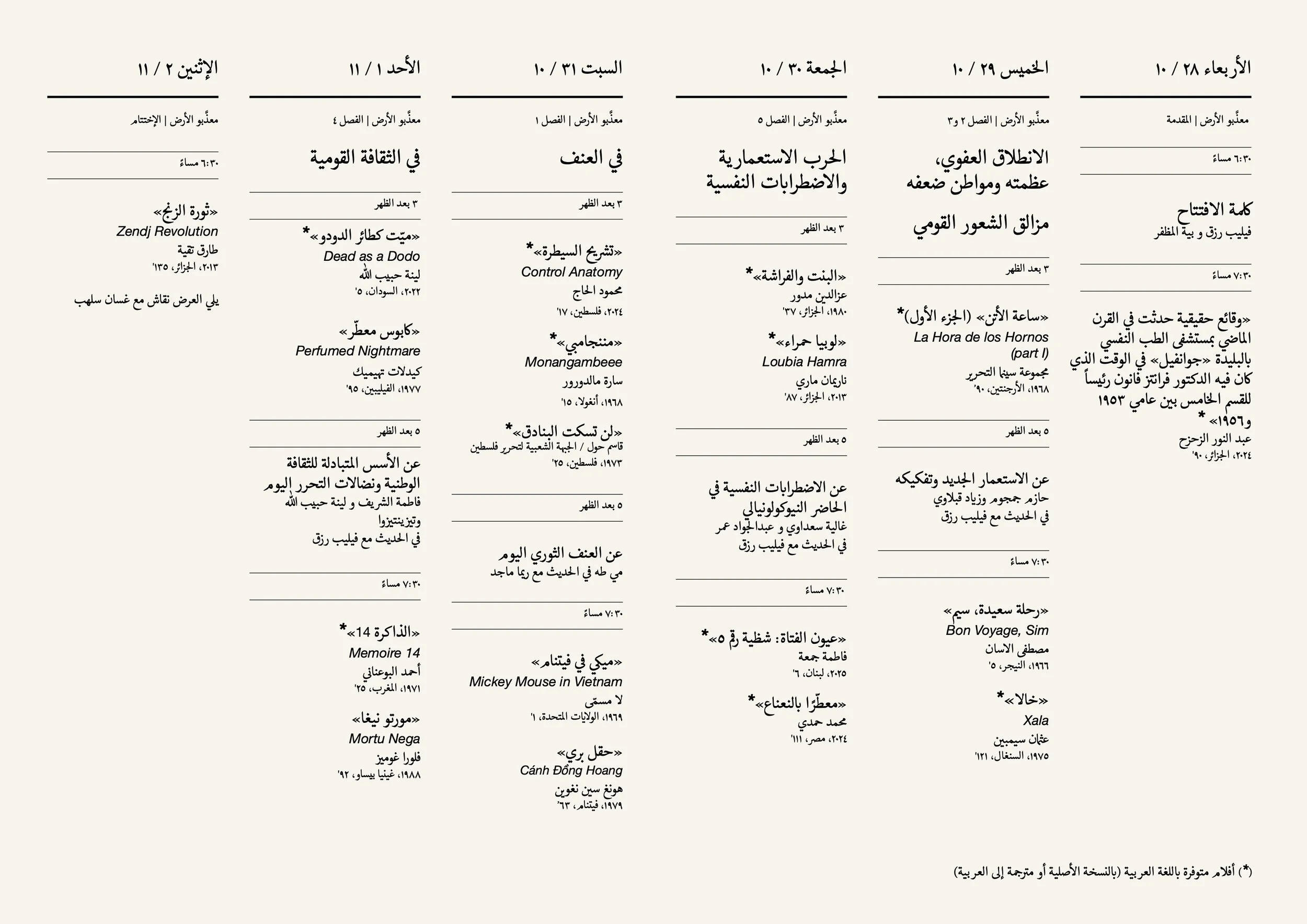
Embark on an archaeological and existential quest, as Tariq Teguia does, to unearth and rediscover within the past—like the Zendj revolution—the memory of revolts that have been silenced, that echo the present persistence of insurrectionary action.
Return to one’s native village to find ways to act against a reality in crisis, as Kidlat Tahimik does, make films with one’s own people, rediscover within the community a space for free invention.
Dissect colonialism in its most hidden recesses, in the very language of science and rationality, as Leena Habiballa does, by revealing the violence buried within systems of knowledge that we have uncritically adopted.
Engage a pre-colonization era in order to inform the present and future, like Ahmed Bouanani and Flora Gomez do by centering rituals and customs that must remain part of our present.
Create an aesthetic language capable of absorbing and transmuting violence, as Mohammed Hamdy does, of infusing the nightmare with fragrance, by offering a space for rest and respite in the face of horror.
Exorcise the scars of colonialism by letting children rehearse and reinvent history by the sea in Algiers, as Narimane Mari does.
Bring the resistance to the screen in all its beauty, in the resilience, courage, and care of its protagonists, as Sarah Maldoror and Hong Sen Nguyen do.
Take from the aesthetic strategies of the colonial and neocolonial core, and radicalize them for our own contexts to spawn active participation in the ongoing struggle against neocolonialism, like the Grupo Libéracion.
Big Ideas, Real Impact.
Thoughtfully crafted to elevate what matters most.
شكّل طوفان الأقصى بؤرة ولوج من أزمة طويلة الأمد، وكشف عن واقع لا ريب فيه: لقد تغيّرت أشكال الهيمنة في مظهرها، ولم تتغيّر في جوهرها.
يسعى مجلس فانون إلى محاكاة هذا الواقع، مقترحاً قراءة نقدية لكتاب "مُعذَّبو الأرض" لفرانز فانون الصادر ترجمته العربية سنة ١٩٦٣، جامعاً الناس بعد اكتر من ٦٠ سنة من صدور الكتاب بمقر المؤسسة العربية للصورة ببيروت، المدينة التي أهدت العالم ترجمته العربية، وذلك لتقديم مجموعة أفلام صادرة من "المستعمرة العالمية الجديدة"، حيث يتفاعل كل فيلم بطريقته الخاصة مع فصل من فصول الكتاب. فعلى مدى ستة أيام، بمعدّل يوم عرض لكل فصل، يدعو المجلس الحاضرين للتجمّع، لمشاهدة الأفلام، للتفاعل مع المتحدّثين والعودة إلى نقاشات طرحها الكتاب ولا زالت قائمة إلى اليوم، سعياً منا لاستيعاب موقعنا بشكل أفضل وسط سياق الاستعمار الجديد الذي نعيشه، والذي تنبّأ فانون بحدوثه.
عقب الحرب الأوروبية الكبرى الثانية، المسمّاة بالحرب العالمية الثانية، سعت الولايات المتحدة الأمريكية لافتكاك زمام الهيمنة العالمية من يد القوى الأوروبية، مطالبةً بوضع حدٍّ للاستعمار. وبالرغم من الترحيب الذي لقيه هذا النداء من قبل جميع مستعمَري العالم، إلا أن الحقيقة أظهرت عكس ذلك. ففي فلسطين، وبينما تذرّع المهيمن الجديد بـ"شعور الذنب الأوروبي" لتبرير ما زعم أنها حالة استثنائية من الاستعمار التقليدي، وفّر المشروع الصهيوني غطاءً عقائدياً لاستمرار الإمبريالية وهيمنة العرق الأبيض في عصرنا الحالي، بأشدّ صورها ضراوةً. والأشيع أن الاستعمار ساد ولا يزال يسود في ثوب الاستعمار الجديد أو النيوكولونيالية؛ المصطلح الذي وضّحه فانون في الفصل الثالث من كتابه. إذ بيّن أن الاستعمار، بالرغم من زعم الغرب بزواله، باقٍ في شكل استعمار جديد، في شكل تعاون بين قوًى إمبريالية خارجية وداخلية، قديمة وحديثة: حكومة وجيش وبرجوازية، تتشارك بينها المصالح الاقتصادية. وبهذا، تبنّت القوى الاستعمارية استراتيجية أقلّ مواجهة ووضوحاً وأكثر دهاءً، يشارك فيها أبناء الشعوب المستعمَرة بأنفسهم في السيطرة على مجتمعاتهم، وبه يتستّرون بشكل فعّال على منظومة القوى. وقد أفرز هذا الواقع ضبابيةً لا نزال تائهين فيها إلى اليوم. يتطرّق لها مخرجا فيلم "ساعة الأتن" أوكتافيو خيتينو وفرناندو سولاناس في بيانهم، "السينما الثالثة"، قائلَين: "لقد تمكّنوا من استبدال الصراع ضد الإمبريالية وحكم النخب المحلية بصراع الديمقراطية ضد الفاشية، طامسين بذلك التناقض الجوهري الذي يعيشه بلد واقع تحت وطأة الاستعمار الجديد".
داخل هذا النموذج من الاستعمار الجديد، يعتبر فانون الثقافة الوطنية ساحة قتال حقيقية. فالشعوب المستعمَرة تحتاج إلى سلك مسار موازٍ على مستوى الوعي لإحداث قطيعة مع الأساليب القديمة للهيمنة الاقتصادية والسياسية. ومنه تأتي أهمية الثقافة الوطنية، باعتبارها الأداة التي يعبّر بها المجتمع عن ذاته. فلا يمكن أن يكون المجتمع حرّاً من دون ثقافة وطنية حرّة. لذلك يستوجب علينا، على المستوى الثقافي، تحديد الممارسات التي تُبقي على الاستعمار في زمننا الحالي واقتلاعها من جذورها، بشقّيها المادي والرمزي. وتبدأ هذه العملية بالاحتفاء بالثقافة واللغة المحلّيتين دون نوستالجيا، كما تستلزم أن يكون المجتمع ملمّاً بماضيه، منسجماً مع حاضره بكل ثقة، متحرّراً من آليات الاستعمار، كما يجب إعادة صياغة التعبير الجمالي في حد ذاته والمؤسسات التي تُنتجه.
لقد فشل الفاعلون الثقافيون في أرجاء المستعمرة العالمية الجديدة طوال السنوات القليلة الماضية في اعتبار الإنتاج الثقافي ساحة قتال وفقاً لهذه الشروط، وبالتالي أخفقوا في حماية ثقافتهم الحية من الهيمنة المرتبطة بالاستعمار في شكله الحديث. فعوض أن تُشكّل أعمالهم مصدر ثبات ونشيد تحرّر موحّد، أنتج الفاعلون الثقافيون أعمالاً ترتبط ارتباطاً تامّاً بروح الاستعمار وآلياته الإنتاجية، زادت واقعنا إغتراباً أكثر من الوضوح المرجو منها.
يدعو الناقد الثقافي المغربي عبد اللطيف اللعبي إلى يقظة جذرية في تقييم عملية صنع الثقافة الوطنية. في مجال السينما على سبيل المثال، يتطلّب هذا تقييماً حذراً لأنماط التمويل والإنتاج والتوزيع التي صارت معياراً مسلَّماً به في صناعة الأفلام في عصرنا. كيف يمكننا التصدّي لهذا التحييد الذي تتعرّض له الراديكالية شكلا ومضمونا في الأفلام، سواء بـ"المعايير" المفروضة، أو باستيعابها ضمن الطرق والأشكال التي تُعرض بها الأفلام اليوم؟
يسلّط مؤلّفا بيان "نحو سينما ثالثة" الضوء على هذه المعضلة، بكشفهما طرق عمل هذه المنظومة. إذ يقترحان تصنيفاً للسينما مبنيّ على قراءة مادية، كما يدعوان إلى مسار ثالث يسمّيانه "سينما فدائية"، الذي لا يرى السينما كعمل فني بحت يمتاز بالجمال، بل كجناح مسلّح في خدمة كفاح التحرّر الوطني، الذي من مهامه إيجاد أساليبه الخاصة في مواجهة النظام على المستوى المادي والجمالي. وإذا ما أخذنا مفهوم الاستعمار الجديد على محمل الجدّ، فنحن لا زلنا في مرحلة الانعتاق من المستعمِرين، القدامى منهم والجدد، المحلّيين والأجانب.
إن هدف مجلس فانون ليس التعليق على كتاب "مُعذَّبو الأرض"، بل مواصلة النقاش الذي تعطّل بسبب موت فانون المبكر، ثم أُسكت تماماً جرّاء الاضطهادات التي تعرّض لها المناضلون في مرحلة ما بعد الاستقلال. نأمل إعادة قراءة "مُعذَّبو الأرض" اليوم وباللغة العربية، سعياً لإشعال فتيل القوة السياسية، لتسمية أعدائنا، لنسف تناقضاتنا وسبلنا المسدودة.
يدعونا هذا المجلس للتساؤل: كيف يمكن للفاعلين الثقافيين ترسيخ عملهم في منطق كفاح؟ كيف يمكن للمرء استرجاع قدرته على تسمية العالم واختراعه؟
إن إعادة قراءة فانون، الآن وهنا، هي رفض لإبقاء أفكاره معزولة عن التطبيق؛ و في نفس الوقت تذكير بأن فكره نبع من تجربة محدَّدة، من كفاح، من جسد منخرط في تاريخ النضال. لذلك نُشيد بأهمية تطوير بيئة عمل، تتبنّى فكر فانون كنقطة انطلاق لتواصل المسار. ليقوم مُعذَّبو الأرض بتشخيص جذري للحاضر، و يكونوا قوة دفع.
يُظهر لنا الطبيب النفسي المناضل فرانز فانون أن مناهضة الاستعمار تتطلب قلباً للبنى الباطنية للتأمّل والتعبير. يجب على الفاعل الثقافي المناهض للاستعمار، والمؤسسات التي تدعمه، المشاركة في خلق هذا الواقع؛ يجب عليهم بناء ودعم السرديات، والدفع بالمخيّلات التي ترفض الأزمنة الاستعمارية، التي تعدنا بالتطوّر، وتصادر مستقبلنا. على الفاعل الثقافي المناهض للاستعمار أن يتعلّم كيف يحلم سياسياً من جديد، و أن يكرس سرديته لخدمة النضال. بهذه الطريقة نستطيع استيعاب المهام المزدوجة للثقافة كما يتصوّرها سولاناس وخيتينو، فحسب قولهما: "سينما الثورة، هي في نفس الوقت، سينما هدمٍ وإعادة بناء".
لكن، ما تأثير هذا المنعرج على علاقتنا بالعالم؟ ماذا يفعل بالسينما؟
من المؤكد أنه يفرض منطقاً استعجالياً، كثيراً ما يتخلّله الإرباك، ليعيد بذلك إحياء السؤال الأزلي:
ما العمل؟
العمل، أن نبقى مرنين، أن نتحرّك بخفّة، وكما يذكّرنا باسل الأعرج: أن نتصوّر النضال في شكل حركة دائمة لا تهدأ، دون أن نغفل عن انسجام عملنا مع خطابنا ومع المكان الذي ننطلق منه.
ثم...
أن ننطلق في رحلة وجودية لإعادة اكتشاف الذات كالتي يقوم بها طارق تِڨية، لننقّب ونستخرج من الماضي ذاكرة انتفاضات تمّ طمسها، على غرار ثورة الزنج، التي لا يزال صداها يدوّي في الفعل التمرّدي إلى يومنا هذا.
أن نعود لمسقط رأسنا، لنستلهم من هناك طرق مجابهة هذا الواقع المأزوم، كما يفعل كيدلات تاهيميك. أن نُنتج أفلاماً مع أقاربنا، و نستكشف معهم فضاءً للابتكار الحرّ.
أن نقوم بتشريح الاستعمار في أعتم خباياه، في لغة العلم والموضوعية المزعومة، كما تفعل لينا حبيب الله، بإظهار العنف المدسوس في أنظمة المعرفة التي تبنّيناها دون انتقاد.
أن نتفاعل مع ماضينا قبل الاستعمار، لننير حاضرنا ومستقبلنا، كما يفعل أحمد البوعناني وفلورا غوميز، بإبقاء تقاليدنا و طقوسنا في قلب ممارستنا المعاصرة.
أن نبتكر لغة جمالية قادرة على امتصاص العنف وتحويله، مثلما يفعل محمد حمدي، معطِّراً الكابوس بالنعناع، موفِّراً فسحة للراحة والسكينة وسط كل هذا الرعب.
أن نطرد شبح الاستعمار بالسماح للأطفال باللعب وإعادة كتابة التاريخ على شاطئ في ساحل الجزائر، كما تفعل ناريمان ماري.
أن نأتي بالمقاومة إلى الشاشة، بما تحمله من جمال وصمود وشجاعة ورعاية لأبطالها، كما تفعل كلٌّ من سارة مالدورور وهونغ سان نغويان.
أن نأخذ من الاستراتيجيات الجمالية للاستعمار القديم والحديث لنوظّفها بشكل جذري مع ما يناسب سياقاتنا، مستثمرين إياها لتحفيز المشاركة الفعّالة في النضال الراهن ضد الاستعمار الجديد، كما يفعل غروبو ليبيراسيون.